

Artisan Coffee Roasting Process Explained: What Makes Quality Beans
You've probably wondered why some coffee tastes so much better than others. It's not just about where the beans come from, though that matters. The real magic happens during artisan coffee roasting, the process that unlocks the flavor potential locked inside every green coffee bean.
Here's the thing: roasting isn't just heating up beans and hoping for the best. It's a precise craft that determines whether you're drinking something extraordinary or something flat and forgettable. When you understand how artisan roasting works, you'll know exactly why Everline Coffee Co. obsesses over every step of the process.
In this article
The Core Steps of Artisan Coffee Roasting Process
Professional roasting follows a straightforward sequence, but each stage is where expertise really shines. Here's what happens:
- Sorting: Before anything else, specialty-grade coffee beans are carefully inspected and sorted to remove defects. You don't roast bad beans and hope they get better. You start with quality.
- Roasting: This is where the transformation happens. Raw beans go into a roaster heated to precise temperatures. The heat triggers chemical reactions inside the bean that develop flavors, aromas, and color.
- Cooling: This step is just as critical as roasting itself (more on this in a minute). Cooling stops the roasting process at exactly the right moment, locking in those flavors.
- Packaging: Freshly roasted beans are packaged quickly to preserve that quality. Craft roasters often add handwritten labels and careful sealing because they know freshness matters.
This isn't complicated in theory, but executing it consistently requires real skill and attention. That's what separates artisan roasters from everyone else.
Why Roasting Temperature and Timing Control Flavor
Here's where the science gets interesting. When raw coffee beans are heated, something remarkable happens inside them: chemical compounds begin breaking down and recombining, creating hundreds of new flavors and aromas. This is called the Maillard reaction, and it's the same process that makes toast brown or gives steak its crust.
But here's what most people don't understand: the speed at which temperature rises matters as much as the final temperature itself. Roasters call this the "Rate of Rise," or ROR. Managing ROR is essential because sudden crashes in ROR (when the temperature drops unexpectedly) are actually what cause those undesirable "baked" flavors everyone complains about. It's not slow roasting that creates baked coffee, it's poor ROR control.
Think of it like baking bread. If your oven temperature fluctuates wildly, your bread won't rise evenly and the crust suffers. Same principle with coffee. Specialty roasters at Everline Coffee Co. use roasting curves and monitor ROR to ensure every bean develops its best flavor profile, not a flat, lifeless one.
Cooling: The Overlooked Hero of Quality Roasting
Most people think roasting ends when the roaster stops heating. Wrong. Cooling is its own distinct, essential phase.
Beans continue to roast even after they leave the roaster because they've absorbed so much heat. If you don't cool them quickly and effectively, they'll over-roast and become bitter or ashy. Professional roasters use cooling trays or specialized cooling systems to bring beans down to room temperature as fast as possible, halting those internal chemical reactions at the perfect moment.
This is why coffee you buy from a specialty roaster tastes fresher and more vibrant than mass-produced coffee that's been sitting in a warehouse for months. The attention to cooling preserves the good flavors that took so long to develop.
Understanding Specialty-Grade Coffee and Artisan Standards
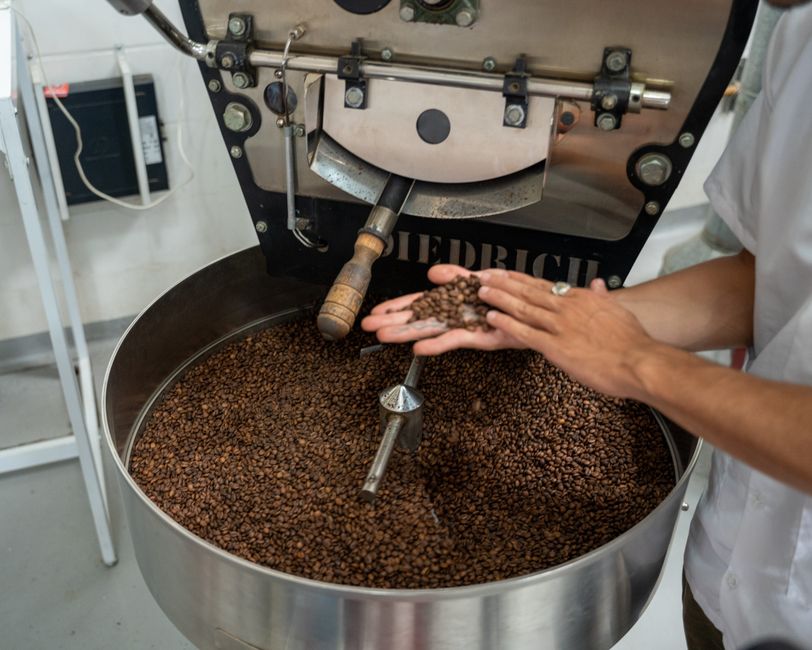
You'll see "specialty coffee" thrown around a lot, but it has a real meaning. Specialty-grade beans are held to strict quality standards before they ever reach a roaster. They have fewer defects, better bean density, and more flavor potential than commodity-grade coffee.
Related: Best Specialty Coffee Beans for Gift 2026: Top 5 Ranked
Related: Best High Quality Coffee Subscription Services 2026: Top 5 Ranked
When an artisan roaster sources specialty-grade beans, they're making a commitment: these beans are worth the extra care. That's why roasters spend time dialing in their roast profiles for each origin. A Colombia or Ethiopia Natural bean needs different treatment than a Brazil Santos. The altitude where it grew, the processing method, and the bean's density all influence how it should be roasted.
Specialty roasting isn't about one perfect formula. It's about respecting each bean's unique characteristics and bringing out what makes it special.
Why Roasting Knowledge Matters for Your Daily Cup
You might think, "This is interesting, but does it really change my coffee experience?" Absolutely. A well-roasted bean tastes cleaner, brighter, and more complex. You'll notice actual flavor notes instead of just "coffee taste." You'll enjoy your morning ritual more because what's in your cup actually deserves to be there.
The difference between a freshly roasted, intentionally developed bean and a poorly roasted one is stark. One has depth and personality. The other tastes muted and forgettable, no matter how good the origin was. That's why understanding the roasting process helps you make smarter coffee choices.
According to research published in the Journal of Food Science, the roasting process is critical to coffee's final flavor and aroma profile, with specific temperature management directly affecting consumer preference and taste perception.
When you choose coffee from roasters who understand and respect this process, you're choosing quality over convenience. You're choosing beans that were handled with care from farm to your cup. That's what makes specialty coffee worth the investment.
Related: What Makes Specialty Coffee Different: The Complete Guide
Related: How to Choose Quality Coffee Beans: 10 Expert Tips
How to Find Truly Artisan-Roasted Coffee
So how do you know if a roaster is taking this seriously? Look for these signs:
- Roast dates on packaging: Real roasters print the roast date because freshness matters. Coffee is best within 2-4 weeks of roasting.
- Single-origin transparency: They should be able to tell you where beans come from, the elevation, and the harvest date.
- Intentional blend design: If a roaster blends beans, they should explain why. What flavors are they going for?
- Reasonable prices: Specialty coffee costs more than supermarket coffee, but it shouldn't be absurdly expensive. You're paying for quality and freshness, not just a fancy label.
- Educational content: Roasters who understand their craft usually want to share that knowledge. They explain their process because they're proud of it.
Quality roasters use specialty-grade beans and apply the roasting techniques we've discussed because they know that's what delivers the best cup. When you're ready to experience what real artisan roasting tastes like, explore what Everline Coffee Co. offers. Fresh roasted, intentionally developed, and shipped to you as quickly as possible.
What's the difference between light, medium, and dark roasts?
The roast level refers to how long the beans roasted before cooling. Light roasts are removed earlier, preserving more origin flavors and acidity. Medium roasts balance origin character with roasting-developed flavors. Dark roasts emphasize the roasting process itself, creating bolder, fuller-bodied coffee. The "best" roast level depends entirely on your taste preference, not on what's objectively better.
Can I taste the difference between a well-roasted and poorly-roasted bean?
Yes, absolutely. A well-roasted specialty bean will taste clean, with distinct flavor notes you can identify. A poorly roasted bean tastes flat, sometimes with undesirable notes like bitterness, ashiness, or staleness. Once you've had a great example, it becomes hard to go back to mediocre roasting.
How fresh does roasted coffee need to be?
Coffee is best consumed within 2-4 weeks of the roast date. It's still drinkable after that, but the flavors fade. That's why buying from roasters with fast shipping matters. You want beans that were roasted recently, not beans sitting on a shelf for months.
Why do some roasters include handwritten labels or special packaging?
Artisan roasters add these personal touches because they take pride in their work. Handwritten details and careful packaging signal that someone cared about your experience from roasting to delivery. It's a reflection of their commitment to quality, not just marketing.