

Fresh Coffee Beans Delivered to Home: 2026 Guide
Table of Contents
- Why Fresh Coffee Beans Delivered to Home Beat Grocery Store Bags
- How to Choose Coffee Beans for Home Brewing
- Roast to Order Coffee Beans: What the Model Actually Means
- How to Store Coffee Beans for Maximum Freshness
- Subscription Models and Delivery Frequency Explained
- Water Chemistry and the Environmental Footprint of Shipping
- Conclusion
- Frequently Asked Questions
Last Updated: September 14, 2026
Why Fresh Coffee Beans Delivered to Home Beat Grocery Store Bags
Fresh coffee beans delivered to home solve a problem grocery aisles quietly create: time. Coffee starts losing its best flavors within days of roasting, yet most supermarket bags sit in warehouses and on shelves for weeks or months (Changes in sensory quality characteristics of coffee during storage). Everline Coffee built its model around closing that gap, shipping whole bean coffee straight to your door so the bag you open is far closer to its roast date.
That difference is the entire argument for buying fresh coffee beans online instead of grabbing a bag with your groceries.
The Roast Date Problem on Supermarket Shelves
Most grocery bags print a "best by" date, not a roast date. Best-by dates are typically set months out, so the beans inside could already be well past their peak by the time they reach your kitchen.
A common mistake is assuming a premium-looking bag is fresh. Freshness comes down to one number: the roast date. If a bag does not show it, you cannot judge how long those beans have sat. The clock starts when you order, not when the beans were packaged for a distribution center.
How to Choose Coffee Beans for Home Brewing
Choosing coffee beans for home brewing comes down to three things: roast level, origin, and how you brew. Match those to your equipment and routine for a consistent cup without guesswork.
Start with the roast date, then work outward:
- Roast level: light roast for brighter, more acidic cups; medium roast for balance; dark roast for deeper, smokier flavor
- Origin: single-origin for a clear, distinctive flavor profile; blends for consistency
- Bean type: Arabica beans dominate specialty coffee for their sweetness and complexity
- Grind size: match it to your brewing method, not the bag
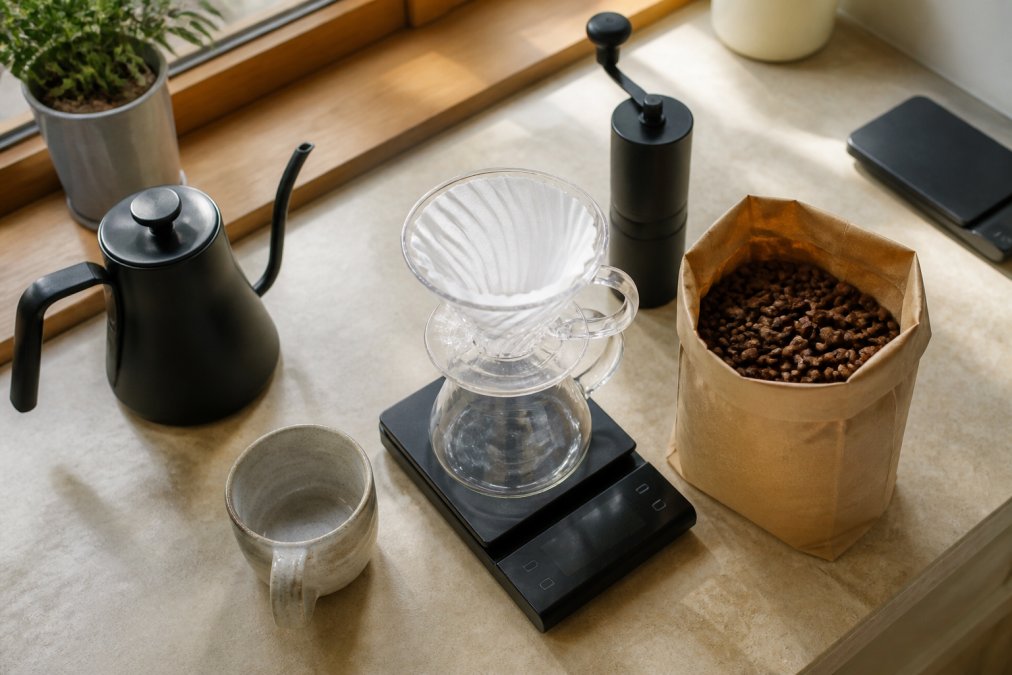
Matching Roast Level to Your Brewing Equipment
Your brewing equipment should drive your roast choice. A medium roast is the safest starting point because it works across most methods.
Here is how the pairing tends to work in practice:
| Brewing Method | Best Roast Level | Why It Works |
|---|---|---|
| Pour-over | Light to medium | Highlights acidity and clarity |
| Drip machine | Medium | Balanced and forgiving |
| French press | Medium to dark | Stands up to full immersion |
| Espresso | Medium to dark | Handles pressure and milk |
Coming from grocery-store coffee, expect a lighter roast to taste sharper at first. That is acidity and aroma, not a flaw.
Roast to Order Coffee Beans: What the Model Actually Means
Beans are roasted, rested briefly, and shipped, so the roast date is close to the day it arrives.
Freshness is built into the process rather than hoped for.
Degassing and Peak Flavor Windows
Freshly roasted beans release carbon dioxide for several days after roasting, a process called degassing (Carbon monoxide emission rates from roasted whole bean and ground coffee). Brew too soon and the gas interferes with extraction, giving a flat or uneven cup.
The peak flavor window usually opens a few days after the roast date and holds for a couple of weeks when stored well. Fresher is not always better on day one: give whole bean coffee a short rest, then brew within its window.
How to Store Coffee Beans for Maximum Freshness
Storing coffee beans for maximum freshness means protecting them from four enemies: oxygen, moisture, heat, and light. Keep whole beans airtight, away from the stove and out of the sun.
Here is a simple routine that works:
- Keep beans in an airtight, opaque container
- Store at room temperature, not in the fridge
- Buy in amounts you will finish within a few weeks
- Grind right before brewing
- Keep the original bag's valve seal if you transfer beans
Freezing works for longer storage if you seal beans well and thaw them fully before grinding. The fridge exposes beans to moisture and odors every time you open the door.
Troubleshooting Stale Beans
Stale beans announce themselves: the aroma fades, the cup tastes flat or papery, and the flavor turns muddy rather than bright. Check the roast date first.
- Flat, lifeless cup: likely past its peak window
- Papery or cardboard taste: oxygen exposure over time
- Inconsistent extraction: stale beans plus an uneven grind
- No aroma when you open the bag: the beans were old before they arrived
The fix is simpler than people expect: buy smaller amounts more often, and let a roast-to-order subscription keep a fresh supply rotating in.
Subscription Models and Delivery Frequency Explained
Subscription coffee services deliver on a schedule you set, so a fresh bag arrives before you run out. But the details of how a subscription works determine whether you get peak-flavor coffee or a backlog of stale bags.
How to Calculate Your Delivery Frequency
The right cadence is a math problem, not a guess. Start with how much you brew:
- A standard 12-ounce bag of whole bean coffee yields roughly 16 to 20 cups at a 1:16 coffee-to-water ratio (about 18 grams of coffee per 8-ounce cup).
- A single daily drinker using 18 grams per cup goes through about 1.1 pounds of coffee per month.
- A two-cup-per-day household goes through roughly 2.2 pounds per month.
From there, match the bag size to your cadence:
| Your consumption | Bag size | Suggested frequency |
|---|---|---|
| 1 cup/day | 12 oz | Every 2 weeks |
| 2 cups/day | 12 oz | Weekly |
| 2 cups/day | 2 lb | Every 2 weeks |
| 3+ cups/day or espresso | 2 lb | Weekly |
Time each delivery so you finish one bag as the next arrives. That keeps every cup inside its peak window, a few days after the roast date through about two to three weeks after, when stored well.
Shipping Timelines and What They Mean for Freshness
Fast shipping is crucial. A common pattern: ship within 24 hours, and use carriers delivering in two to four business days domestically. That puts the bag in your hands roughly three to six days after roasting, right as the peak flavor window opens.
Everline Coffee's precision roasting process ensures consistent, balanced flavor, bag after bag, so your morning cup tastes the same whether it is Monday or the weekend.
Water Chemistry and the Environmental Footprint of Shipping
Two factors most coffee guides skip can make or break your cup at home: the water you brew with and the footprint of getting beans to your door. Both matter more than most buyers realize.
Water Chemistry: The Ingredient You Are Not Measuring
Coffee is roughly 98 to 99 percent water by weight, so dissolved minerals directly change how flavors extract. The Specialty Coffee Association publishes water standards most home brewers never see, but the takeaways are simple:
- Total hardness: Aim for roughly 50 to 175 ppm as calcium carbonate. Very soft water under-extracts and tastes flat; very hard water mutes acidity and can scale your kettle and espresso machine.
- Alkalinity: Moderate alkalinity (around 40 ppm as calcium carbonate) buffers acidity without flattening it. High alkalinity dulls bright, fruity notes.
- pH: Neutral to slightly alkaline (around 7) is a safe target. Extreme pH on either end distorts extraction.
- Chlorine and chloramine: Both mask flavor.
The Environmental Footprint of Shipping Coffee to Your Door
How to Balance Freshness and Footprint
Conclusion
Frequently Asked Questions
How long do coffee beans stay fresh after roasting?
Whole bean coffee hits peak flavor roughly 4 to 14 days after the roast date, then fades over the following weeks. Past six weeks, most beans taste flat no matter how you brew them. That window is why fresh coffee beans delivered to home matter: a bag shipped quickly reaches you inside the peak, while grocery bags with no roast date could already be months old.
How do I know the beans I order online are actually fresh?
Check the bag for a printed roast date, not a best-by date. If a site hides the roast date or only lists a 'best by' month, treat that as a warning sign. When your order arrives, look for beans with a matte, dry surface and a strong aroma when you open the bag.
What should I look for in a coffee subscription service?
Focus on four things: a visible roast date, whole bean only (pre-ground loses aroma fast), and flexible delivery frequency you can pause or skip. A subscription that forces a fixed schedule with no skip option gets frustrating fast.
Is it cheaper to buy coffee beans online or at the grocery store?
Grocery store coffee often costs less per bag, but you pay for shelf time. Supermarket beans may sit for months before you buy them, so you get less usable flavor per dollar. Online subscriptions usually cost more upfront, but you receive beans within days of roasting. If you drink coffee daily, the freshness difference often justifies the price gap.